

What to Expect During Asbestos Removal
If you’ve discovered or suspect asbestos in your home or workplace, the next step can feel daunting. Most people know asbestos is dangerous, but not everyone understands what happens during removal.
The good news is that when certified professionals handle the job, the process is safe, controlled and often quicker than expected. Here’s a clear guide to what you can expect before, during and after asbestos removal.
Step 1 — Initial survey and testing
Before any work begins, a qualified asbestos surveyor will inspect the property. They look at likely spots such as garage roofs, loft insulation, floor tiles, pipe lagging and textured ceilings.
Next, the surveyor carefully collects small samples and sends them to a UKAS-accredited lab. The lab confirms whether the material contains asbestos and identifies the type. Afterwards, you’ll receive a straightforward report that shows where asbestos is present and what removal or management options you have.
Step 2 — Quotation and plan of work
Once asbestos is confirmed, the removal company prepares a quotation and plan of work. This plan usually explains:
- The type and amount of asbestos that needs removing
- The safety controls and containment required
- The estimated timeframe
- Disposal and clearance costs
- Paperwork and certification you will get at the end

If the job involves licensed work — for example, insulation board or pipe lagging — the contractor notifies the HSE at least 14 days before starting.
Step 3 — Preparing the site
On removal day, the team sets up the work area. They:
- Seal off rooms or external areas with plastic sheeting and warning signs
- Create negative air pressure if needed to stop fibres escaping
- Wear protective clothing and respirators
- Cover floors and protect surfaces to avoid contamination
This preparation keeps the rest of your property safe.
Step 4 — Safe asbestos removal
The method depends on the material:
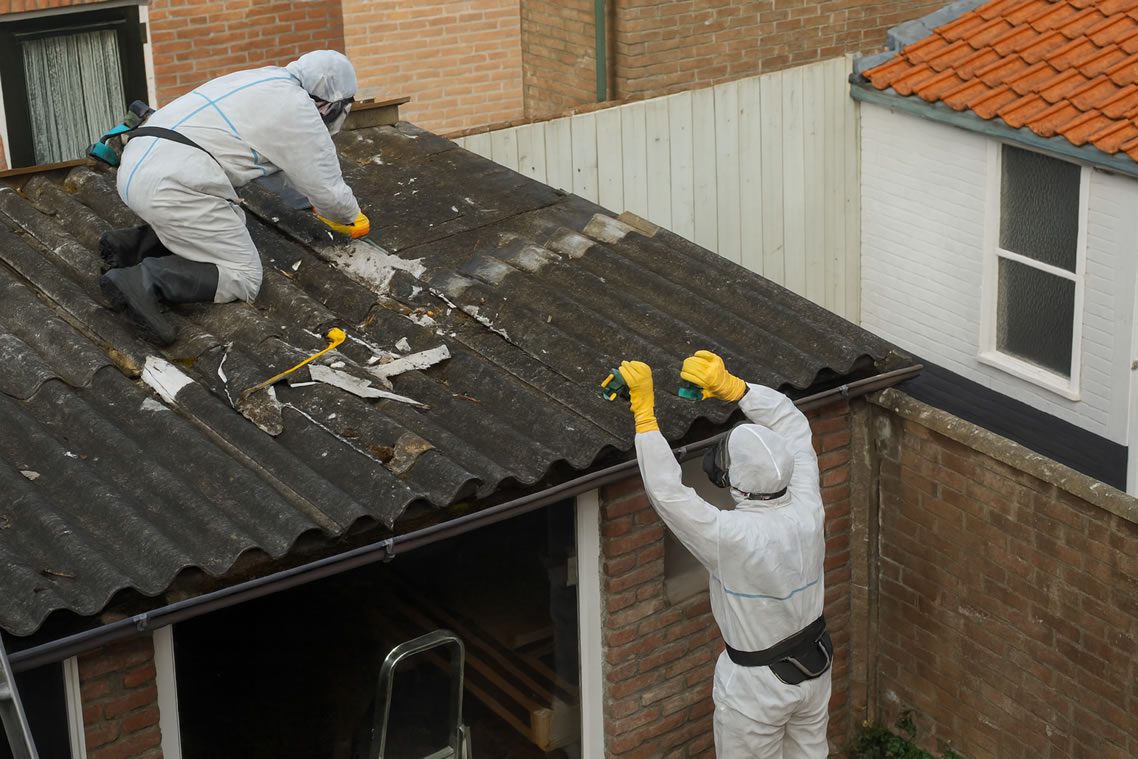
- Garage and shed roofs: The team dampens the asbestos cement sheets and gently unscrews or lifts them whole to reduce breakage.
- Insulation and lagging: They remove high-risk materials inside sealed enclosures with specialist tools and constant air monitoring.
- Textured coatings (Artex): They use wet stripping or controlled scraping to stop dust from spreading.
- Floor tiles: They soften adhesives and lift tiles in one piece wherever possible.
Every piece of waste is double-wrapped in strong plastic, clearly labelled as hazardous, and sent to a licensed disposal site.
Step 5 — Cleaning and clearance testing
After removal, the team cleans the area thoroughly. They vacuum with specialist equipment and wipe down surfaces to catch any remaining dust.
For higher-risk jobs, an independent assessor carries out air tests and a four-stage clearance process. Only when results are clear do you get a certificate of reoccupation confirming the area is safe.
Step 6 — Disposal paperwork
Finally, the contractor gives you a hazardous waste consignment note. Keep this with your property records. It proves the asbestos was removed and disposed of correctly and helps reassure future buyers or auditors.
How long asbestos removal takes
Timings vary:
- Small garage roof: usually one day
- Loft insulation removal: one to three days, depending on size
- Large internal projects: one to two weeks or more
The contractor will advise if you should leave the property during the work. Many external jobs allow you to stay home safely.
Costs to expect
Typical UK price for asbestos removal ranges include:
- Garage roof: £400–£900
- Loft insulation: from £800 upwards
- Artex ceilings: £15–£30 per m²
- Floor tiles: £20–£40 per m²
- Full house clearance: £5,000–£15,000+
Always confirm the quote covers disposal and paperwork.
FAQs about asbestos removal
Do I need to move out?
Not always. For small or outdoor jobs you can usually stay home. Larger indoor jobs might require temporary relocation.
Can I remove asbestos myself?
DIY removal is strongly discouraged. It’s unsafe and can be illegal for certain materials.
Will the contractor notify the HSE?
Yes, if the work is licensed. Non-licensed work doesn’t require formal HSE notice but still must follow safety rules.
What paperwork should I get?
You should receive a plan of work, hazardous waste consignment note and, if applicable, a clearance certificate.
Stay safe and get it done properly
Asbestos removal sounds intimidating, but with trained contractors it’s safe and straightforward. They handle testing, containment, removal and disposal so you can return to a hazard-free property with full documentation.
Request free asbestos removal quotes today and connect with certified UK professionals.

