Asbestos Regulations in the UK Explained (HSE Guide)
Asbestos is still found in millions of homes, offices, schools and factories across the UK. While it was banned in 1999, the legacy of its use remains. Because asbestos can cause serious diseases if fibres are inhaled, strict laws now govern how it should be managed, surveyed, removed and disposed of.
In this guide, we’ll explain the asbestos regulations in the UK, who they apply to, and what you need to do if you own, manage or work on a property that may contain asbestos.
The main legislation
The key law covering asbestos in the UK is the Control of Asbestos Regulations 2012 (CAR 2012). These regulations brought together and updated previous laws on asbestos. They set out clear duties for employers, landlords, contractors and duty holders.
Other relevant legislation includes:
- Health and Safety at Work Act 1974 – requires employers to protect employees from health risks.
- Hazardous Waste Regulations 2005 – covers storage, transport and disposal of asbestos waste.
- Carriage of Dangerous Goods Act 2009 – applies to transporting asbestos waste by road.
The duty to manage asbestos
One of the central requirements of CAR 2012 is the “duty to manage”. This applies to:
- Non-domestic buildings (e.g. offices, schools, factories, public buildings).
- Common parts of domestic buildings (e.g. hallways, stairwells in flats).
The duty holder (often the landlord, owner, or managing agent) must:
- Identify if asbestos is present through surveys and testing.
- Keep records of the location and condition of asbestos.
- Assess the risk of asbestos exposure.
- Create a management plan to control the risks.
- Inform anyone who may disturb asbestos (e.g. maintenance staff, contractors).
Failure to comply can lead to prosecution, fines, and in some cases imprisonment.
Licensed vs non-licensed asbestos work
Not all asbestos work requires the same level of licensing, but all must follow strict safety rules.
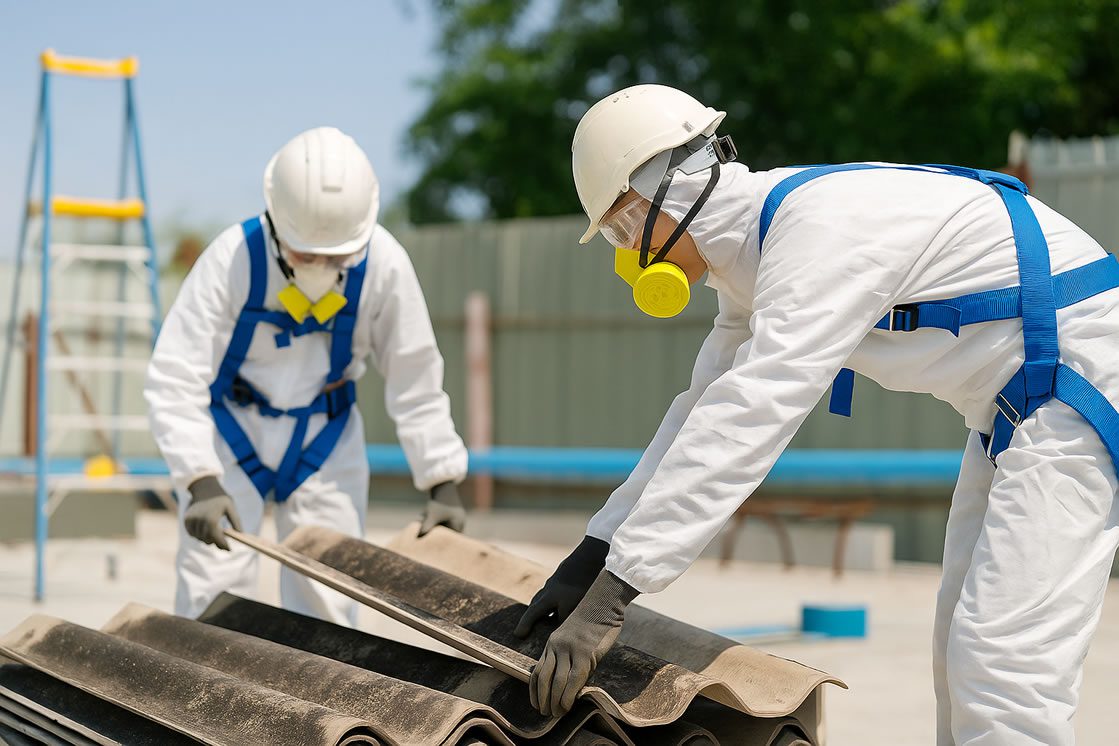
- Licensed work – Higher-risk asbestos such as insulation, pipe lagging, and asbestos insulation board (AIB) must only be removed by HSE-licensed contractors.
- Non-licensed work – Lower-risk materials such as asbestos cement sheets may sometimes be removed by trained but non-licensed contractors.
- Notifiable non-licensed work (NNLW) – Some jobs fall in between, requiring notification to the HSE and additional record-keeping.
Understanding the difference is crucial. Using an unlicensed contractor for licensed asbestos work is illegal.

Asbestos surveys under the regulations
The regulations also set out when surveys are required:
- Management survey – for the day-to-day use of a building. Identifies asbestos that could be disturbed during normal occupation and maintenance.
- Refurbishment & Demolition (R&D) survey – required before renovation, refurbishment or demolition work. Intrusive, and checks behind walls, floors and ceilings.
Both types of survey must be carried out by competent asbestos surveyors, usually UKAS-accredited.
Training requirements
Anyone who may disturb asbestos during their work must receive appropriate training. This includes trades like electricians, plumbers, builders and decorators.
There are three levels of training:
- Asbestos awareness training – for those who may encounter asbestos but don’t work directly with it.
- Non-licensed work training – for those carrying out low-risk asbestos removal.
- Licensed work training – for those handling high-risk asbestos, only available to licensed contractors.
Asbestos removal and disposal rules
- Asbestos must be removed using controlled methods under HSE guidance.
- Waste must be double-bagged, labelled, and transported by licensed carriers.
- Disposal is only allowed at facilities licensed to accept asbestos waste.
- Hazardous waste consignment notes must be provided for every collection.
The Hazardous Waste Regulations and Environment Agency oversee these requirements. Fly-tipping asbestos waste is a serious criminal offence.
Enforcement and penalties
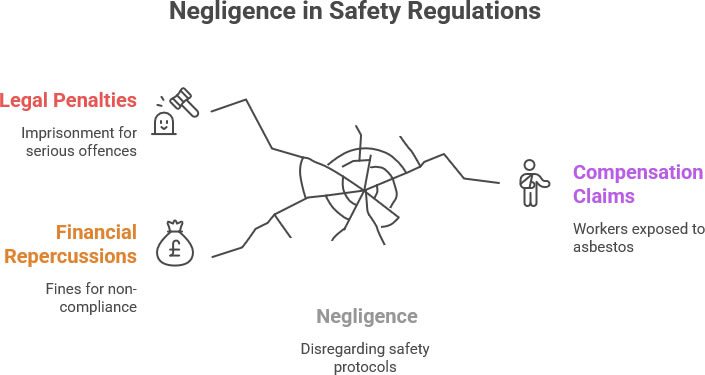
The Health and Safety Executive (HSE) enforces asbestos regulations in the UK. Local authorities may also enforce rules in smaller premises. Penalties for breaching regulations include:
- Fines running into tens of thousands of pounds.
- Imprisonment for serious offences.
- Compensation claims from workers exposed to asbestos.
Recent prosecutions have included landlords, builders and even schools that failed to manage asbestos correctly.
Real-world examples
- Case 1: A building firm in London was fined £90,000 for failing to carry out an asbestos survey before refurbishment. Workers disturbed asbestos insulation board during demolition.
- Case 2: A landlord in Birmingham was prosecuted after leaving asbestos ceiling tiles in poor condition in a rented flat. Tenants were put at risk.
- Case 3: A school in Wales was temporarily closed when contractors disturbed asbestos ceiling panels during routine maintenance without checking records first.
FAQs about asbestos regulations in the UK
Do the regulations apply to homeowners?
Not directly. However, if you’re renovating a pre-2000 property, you should still arrange a survey for safety.
Who is the duty holder in a building?
Usually the landlord, managing agent, or person in control of the premises.
Can asbestos ever be left in place?
Yes. If asbestos is in good condition and unlikely to be disturbed, it may be managed in place rather than removed.
Do all contractors need an HSE licence?
Only for higher-risk asbestos work. Lower-risk work may be done by trained but non-licensed contractors.
What happens if I ignore the regulations?
You risk prosecution, heavy fines, and endangering lives.
| Type of Work | Examples | Who Can Do It? | Requirements |
|---|---|---|---|
| Licensed Work | – Pipe lagging- Asbestos insulation board (AIB)- Loose fill insulation | Only HSE-licensed asbestos contractors | – Full HSE licence- Specialist training- Strict air monitoring- Hazardous waste consignment notes |
| Non-Licensed Work | – Asbestos cement sheets (e.g. garage roofs)- Floor tiles with asbestos- Textured coatings (Artex) in good condition | Trained but non-licensed contractors | – Appropriate training- Safe working methods- Waste must go to licensed disposal sites |
| Notifiable Non-Licensed Work (NNLW) | – Some asbestos cement in poor condition- Certain textured coatings that require removal- Short duration AIB work (low risk) | Trained contractors (non-licensed) | – Must notify HSE- Maintain health records- Use protective equipment- Provide waste disposal notes |
Stay compliant with UK asbestos regulations
Asbestos regulations exist to protect people from harm. If you own, manage or plan to renovate a building built before 2000, you need to take asbestos seriously.
Arrange surveys, follow HSE guidance, and always use certified professionals for asbestos removal.
Get free quotes from licensed asbestos contractors today and make sure your property is safe and compliant.
Asbestos Compliance Checklist (UK Regulations)
Step 1 – Survey the Property
– Arrange an asbestos survey (Management or Refurbishment & Demolition).
– Have samples tested by a UKAS-accredited lab.
Step 2 – Identify and Assess Risk
– Record where asbestos is located and its condition.
– Decide whether to manage in place or remove asbestos.
Step 3 – Choose the Right Contractor
– Licensed contractor for high-risk asbestos (AIB, lagging, loose fill).
– Trained non-licensed contractor for low-risk asbestos (cement sheets, floor tiles).
Step 4 – Notify if Required
– Submit details to HSE for licensed work.
– Notify HSE for notifiable non-licensed work (NNLW).
Step 5 – Safe Removal
– Area sealed and contained.
– Use protective equipment and safe working methods.
Step 6 – Waste Disposal
– Double-bag and label asbestos waste.
– Transport by licensed carrier.
– Dispose at approved hazardous waste site.
Step 7 – Clearance and Records
– Air monitoring and clearance testing.
– Keep hazardous waste consignment notes.
– Update asbestos management plan if needed.