
Asbestos Disposal
Once you remove asbestos from a building, it must be dealt with carefully and responsibly. Unlike ordinary building waste, asbestos is classed as hazardous waste and cannot be thrown away in bins, skips, or general recycling centres. Because of the health risks and strict regulations, asbestos disposal in the UK must always follow clear legal procedures.
Proper asbestos disposal ensures that fibres cannot escape into the air, protecting people, communities and the environment. It also keeps you compliant with UK law and gives you the paperwork needed to prove that the waste has been handled correctly.
Why asbestos disposal is important
Asbestos was widely used in UK homes, schools, factories and offices until it was banned in 1999. Although safe if left undisturbed, asbestos becomes dangerous once it is broken, cut or damaged. At that point, tiny fibres can be released into the air and cause serious diseases such as:
- Mesothelioma – a cancer of the lining of the lungs
- Asbestosis – scarring of the lungs that leads to breathing difficulties
- Lung cancer – linked to long-term asbestos exposure
Even after asbestos has been removed from a building, it is still hazardous until it is fully sealed and disposed of at a licensed site. That’s why safe disposal is just as important as safe removal.
UK laws on asbestos disposal
In the UK, asbestos disposal is regulated by:
- The Control of Asbestos Regulations 2012 – sets out how asbestos must be managed and removed.
- The Hazardous Waste Regulations 2005 – classifies asbestos as hazardous and outlines how it must be stored, transported and disposed of.
- The Carriage of Dangerous Goods Act 2009 – covers the transport of asbestos waste by road.
These laws mean that:
- Asbestos cannot be put in normal skips or bins.
- Only licensed waste carriers can transport asbestos.
- All asbestos must go to a landfill site authorised to accept it.
- A hazardous waste consignment note must be provided to track disposal.
Failure to follow these rules can result in large fines, prosecution, and even imprisonment.
The asbestos disposal process
Professional asbestos disposal follows a strict step-by-step process:
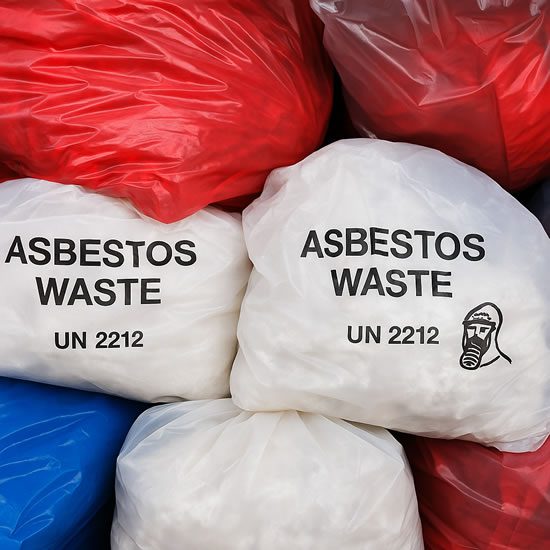
- Packaging – All asbestos waste must be securely double-bagged or wrapped in 1000-gauge plastic sheeting. Each bag or parcel must carry the correct hazardous waste labels.
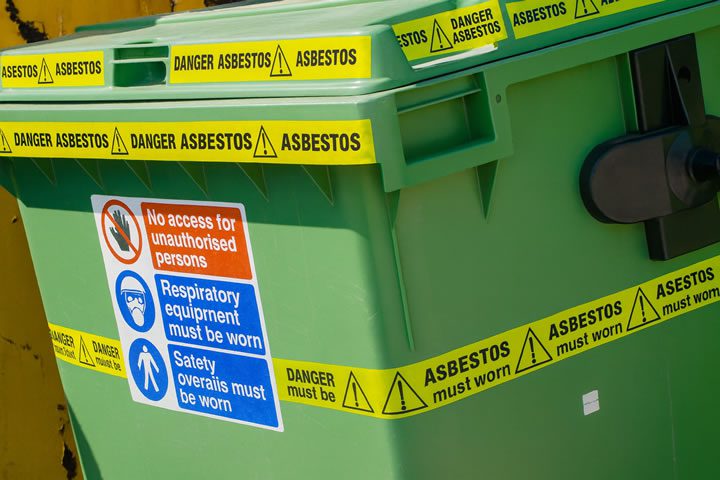
- Storage – Waste is stored in sealed containers on site until transport is arranged. For larger projects, lockable skips or enclosed bins may be used.
- Transport – A licensed waste carrier collects the asbestos. Vehicles must be sealed, labelled and follow safety guidelines.
- Disposal site – The waste is taken to a landfill site that is specially licensed by the Environment Agency.
- Paperwork – A hazardous waste consignment note records the journey, confirming where the asbestos came from and where it was disposed of.
Costs of asbestos disposal
The cost of asbestos disposal varies depending on the amount and type of asbestos waste:
- Small household quantities (such as a garage roof or a few sheets of cement board) may cost from £50 to £150.
- Larger amounts (lofts, insulation, floor tiles, commercial buildings) can run into hundreds of pounds, depending on volume and location.
- Council facilities – Some local authorities accept small amounts of asbestos waste from homeowners for free or a low fee, but you must pre-book and package it correctly.
- Contractor collection – For convenience and larger jobs, licensed contractors can collect and dispose of asbestos directly, with quotes based on weight, volume and transport.
In most cases, asbestos disposal costs are included in the overall asbestos removal quote, but it’s always worth checking that disposal is covered.
Domestic asbestos disposal
Many homes built before 2000 contain asbestos in some form – whether in garage roofs, soffits, textured coatings, or old floor tiles. When asbestos is removed during DIY or renovation projects, homeowners often wonder what to do with the waste.
Options include:
- Contacting your local council to see if they accept asbestos at household waste sites. Not all do, and strict packaging rules apply.
- Hiring a licensed contractor to collect and dispose of the asbestos safely. This is usually the safest and easiest option.
Never attempt to break asbestos into smaller pieces or mix it with other waste, as this increases the risk of fibre release.
Commercial asbestos disposal
For businesses, landlords and local authorities, asbestos disposal is a legal duty under the Duty to Manage Asbestos regulations. Commercial asbestos waste must always be:
- Handled by licensed removal contractors
- Transported by licensed waste carriers
- Recorded with full consignment notes for compliance records
Failure to dispose of asbestos correctly can lead to fines, legal action and reputational damage. For larger projects, contractors usually arrange regular collections and provide all the required documentation.
Environmental concerns
Improper asbestos disposal doesn’t just put people at risk – it can also damage the environment. Fly-tipping of asbestos waste is a growing problem in the UK, often leading to contamination of soil, water and public spaces.
Using licensed asbestos disposal services ensures waste is handled responsibly and helps protect communities from unnecessary risks.
FAQs about asbestos disposal
Can I take asbestos to the local tip?
Some councils accept small amounts of asbestos waste, but you must pre-book and follow strict packaging rules. Always check with your local authority.
Can asbestos go in a normal skip?
No. Ordinary skip hire companies cannot accept asbestos. You must use a licensed contractor or specialist asbestos skip provider.
Do I need paperwork for asbestos disposal?
Yes. A hazardous waste consignment note is required for all asbestos waste. This proves the waste was collected and disposed of legally.
Is it illegal to dump asbestos?
Yes. Fly-tipping asbestos is a serious offence that carries heavy fines and even imprisonment.
What if I only have a small piece of asbestos?
Even tiny amounts of asbestos must be disposed of properly. Contact your local council or a licensed contractor to arrange safe collection.
Can asbestos be recycled?
Currently, most asbestos in the UK is sent to landfill. Research is ongoing into recycling methods, but for now, disposal in licensed sites is the only approved method.
Arrange asbestos disposal today
If you have asbestos waste that needs removing, don’t risk handling it yourself. Arrange professional asbestos disposal and make sure it’s packaged, transported and disposed of safely.
Get a free asbestos disposal quote today and connect with licensed contractors who follow all UK regulations.